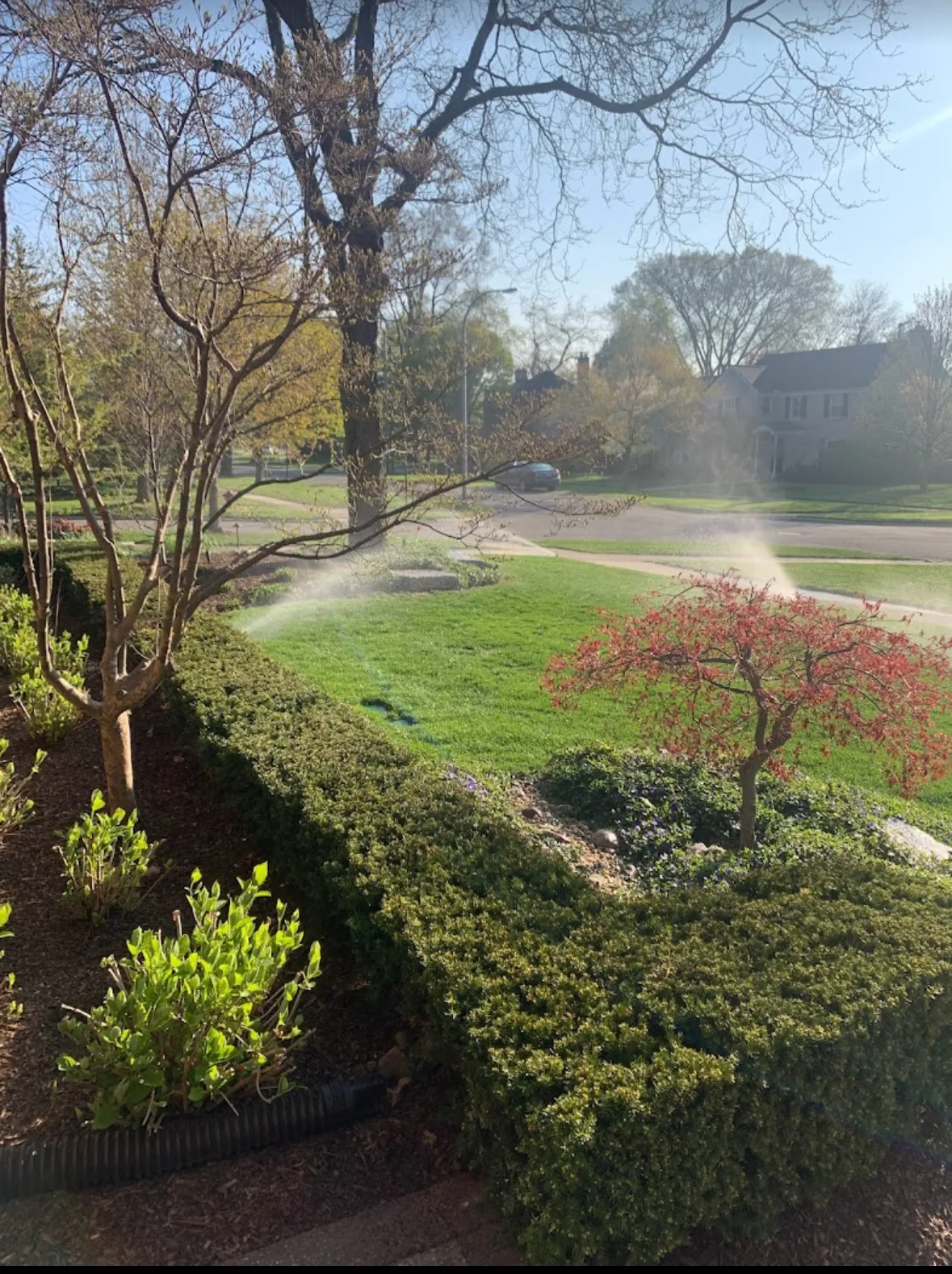
Drip Irrigation Installation in Metro Detroit
Drip irrigation delivers water directly to plant roots at slow, controlled flow rates — dramatically reducing evaporation, runoff, and waste compared to overhead spray systems. Elite Sprinkler Systems designs and installs drip systems for planting beds, vegetable gardens, shrub rows, tree wells, and container plantings throughout Metro Detroit, Oakland County, and Macomb County.
Where Drip Irrigation Shines
- Planting Beds & Perennial Gardens — Deep, slow watering that reaches root zones without wetting foliage.
- Vegetable Gardens — Precise water delivery that reduces disease and maximizes yield.
- Shrub Rows & Hedges — In-line emitter tubing sized to each plant's water needs.
- Tree Wells & New Plantings — Deep-root delivery that establishes plants faster with less water.
- Container Plantings & Raised Beds — Customized zone design for decks, patios, and raised-bed installations.
Why Drip for Beds Instead of Spray?
Overhead spray loses 30–50% of output to wind, evaporation, and foliage wetting. Drip irrigation typically delivers 50–70% water savings on converted zones while improving plant health. For Metro Detroit landscapes with mixed turf and planting beds, converting the bed zones to drip — while leaving the lawn on standard spray irrigation — gets the best of both approaches.
How a Drip System Is Installed
Every drip installation begins with a property walk-through: we measure each bed area, identify root zones and plant varieties, and map the shortest path from your existing irrigation manifold or water source. Most retrofits tie into an existing spray zone's valve, so no new controller wiring is needed — we simply convert that zone's output from spray to drip with a pressure regulator, filter, and header connection.
Once the design is finalized, the installation itself is straightforward: we trench shallow channels (typically 4–6 inches deep) around bed perimeters, run 1/2-inch header tubing, and lay 1/4-inch emitter lines through each planting zone. Emitters are sized to each plant's water requirement — 0.5 gallons per hour for small perennials, 1–2 gallons per hour for established shrubs, and dedicated tree-well bubblers for large specimens. The entire installation is buried under mulch at the end, so nothing is visible from the surface.
Built for Michigan Conditions
Drip irrigation in Metro Detroit has to survive Michigan freeze-thaw cycles. We use pressure-compensating emitters rated for low-flow performance in cooler ground temperatures, and every drip manifold includes a winterization drain so the system purges cleanly during fall blow-outs. Heavy clay soil — common across Oakland and Macomb Counties — actually pairs well with drip because slow emitter flow eliminates the runoff problems that overhead spray creates on clay. Root zones stay evenly moist without surface puddling.
Typical Timeline and Cost
Most residential drip retrofits are completed in a single day. Pricing depends on the number of zones being converted, bed square footage, and emitter density — typical projects range from $600 to $2,000 for a standard residential property with 2–4 bed zones. Adding a new zone to your system — drip or standard spray — runs $600 per zone. We provide a written estimate before any work begins.
Frequently Asked Questions
Can drip and spray share the same zone?
No. Drip emitters deliver water at roughly 10–20% of the flow rate of spray heads, so mixing them on a single zone leaves spray heads under-pressurized and drip zones over-run. Each drip zone needs its own valve, or at minimum an existing spray zone converted entirely to drip.
How often should drip emitters be checked?
We recommend a spring start-up inspection to flush the lines, confirm emitter output, and replace any emitters clogged by mineral buildup or debris. For most Metro Detroit properties, that's once per season. Heavy-use gardens with hard municipal water may benefit from a mid-season check in July.
Will drip irrigation work with my existing controller?
Yes, in nearly every case. Drip zones use standard 24-volt solenoid valves that connect to any existing Rain Bird, Hunter, Toro, Rachio, or Hunter Hydrawise controller. If your controller is more than 15 years old, we may recommend a smart-controller upgrade to enable the longer, slower run times drip zones need.
Schedule Drip System Design
Call (586) 498-6112 or request a quote online. We design custom drip layouts based on your plantings, soil, and existing irrigation infrastructure throughout Ferndale, Royal Oak, Birmingham, Troy, Sterling Heights, and all surrounding Metro Detroit communities.